
Every year on mild, rainy nights in spring, large numbers of amphibians migrate to their breeding grounds in lowland wetlands and vernal pools during what are known as “Big Nights.” This mass movement is a critical part of their life cycle, but many of our roads cut through these habitats and cause high levels of amphibian death and injury due to vehicle traffic, making migration journeys one of the most vulnerable parts of their life cycle.

Volunteers pull on reflective vests and strap on headlamps to survey rain-soaked roadsides, playing a vital role by monitoring migration routes. Volunteers help ensure safe passage by carefully moving amphibians across the road while collecting data on species, numbers, and mortality. The Squam Salamander Brigade contributes to amphibian conservation research in collaboration with the Harris Center for Conservation Education and the NH Fish and Game Reptile and Amphibian Reporting Program (RAARP). Volunteers are an essential link in safeguarding amphibian populations during one of the most vulnerable moments of their life cycle.
So far, volunteers have helped move a whopping total of 518 amphibians! This migration included:
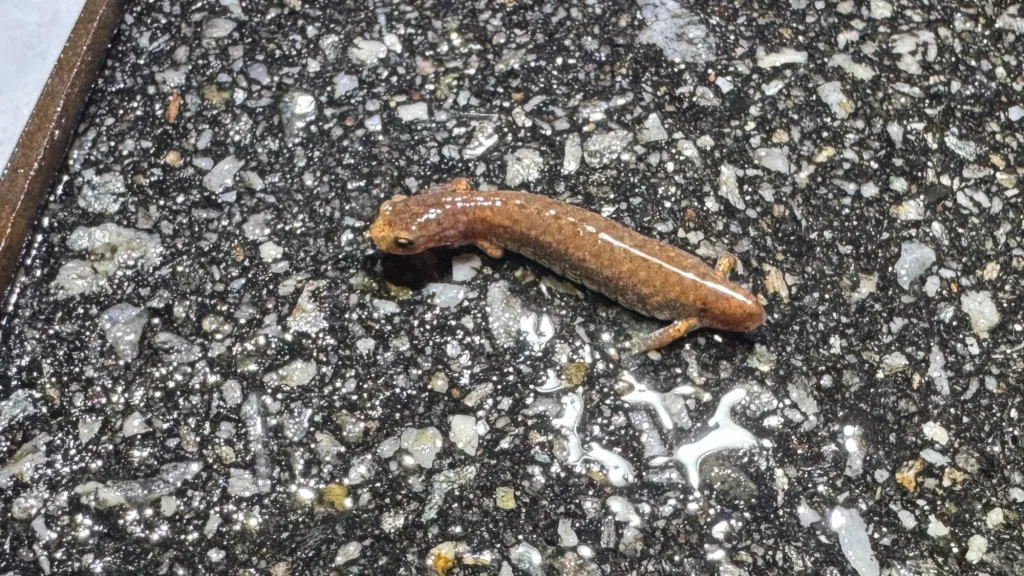
The season isn’t over yet. We will still likely have a couple more migrations as amphibians make the journey from the wetland and vernal pools back to the forest. A huge thank you to all the volunteers who contributed their efforts toward the Squam Salamander Brigade and protecting our local amphibian populations!
