
Winter in New Hampshire brings snow, ice, and the need to keep roads, driveways, and walkways safe. One of the most common tools used for winter maintenance is road salt, typically sodium chloride. Salt works by forming a brine that lowers the freezing point of water, helping to melt ice and improve traction. While effective, salt can have lasting environmental impacts once it dissolves and washes into surrounding soils and waterways.
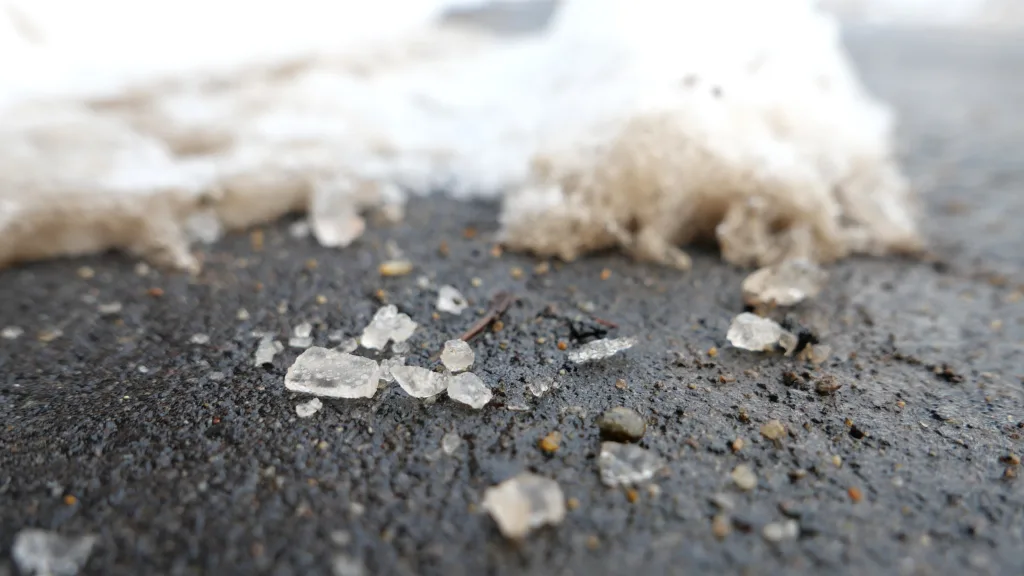
Chloride from road salt can be toxic to aquatic life, even at relatively low concentrations. Over time, chloride accumulates in lakes, rivers, and streams, stressing fish, amphibians, and other organisms. Salt runoff can also contaminate drinking water supplies and alter soil chemistry, damaging plants, trees, and roadside vegetation.
Salt does not break down or disappear after it is applied. Instead, it moves with melting snow and ice into the landscape. Because Squam Lake is a closed watershed, meaning water flows into the lake but not out, chloride buildup is especially concerning.
Salt is most effective when temperatures are between 15°F and 32°F. Within this range, it creates a salt water brine that melts ice more efficiently than plain water. Below about 15°F, salt becomes far less effective, and applying more does not improve results. It simply increases pollution.
Small changes in winter maintenance can significantly reduce salt pollution while still keeping surfaces safe.
Shovel early and often to prevent snow from bonding to surfaces. Ice is harder to remove once it forms. Applying salt or liquid brine before a storm can prevent ice from forming in the first place. Ideally, salt should be applied one to two hours before snowfall begins rather than during or after the storm.
A small amount of salt goes a long way. About one coffee mug of salt is enough for a typical driveway. If salt remains visible after the ice melts, too much was used. Sweep up excess salt after storms and reuse it when possible.
Focus salt use only where it is truly needed, such as steep slopes, shaded areas, or high-traffic walkways. Avoid spreading salt near the lake shore, wetlands, or drainage paths whenever possible.
Using alternatives can reduce environmental harm, especially near homes, walkways, and sensitive areas. Calcium Magnesium Acetate, often called CMA, is less harmful to water quality and less corrosive than traditional salt. While more expensive, it can be a good option for areas close to the lake.
Physical methods like shoveling, snow blowing, and ice chipping are often the most effective and environmentally friendly options. Traction materials such as sand can improve footing when used sparingly, though they should be swept up after winter to prevent sediment from entering waterways. Natural materials like wood ash or sawdust can also provide traction on icy surfaces.
